
Implementation of the Stenner Creek Watershed Enhancement Project


Overview
The Stenner Creek Watershed Enhancement Project was implemented by the Coastal San Luis Resource Conservation District in partnership with California Polytechnic University San Luis Obispo and Pacific Watershed Associates to reduce sediment delivery from legacy ranch roads and improve aquatic habitat for federally threatened South-Central California Coast steelhead.
The project builds on planning completed in 2022–2023 and addresses long-standing erosion and drainage issues associated with aging road infrastructure on Cal Poly’s Serrano and Peterson Ranches. These ranches support working lands, research and education, and public recreation, while also providing critical habitat for sensitive aquatic species.
Background and Need
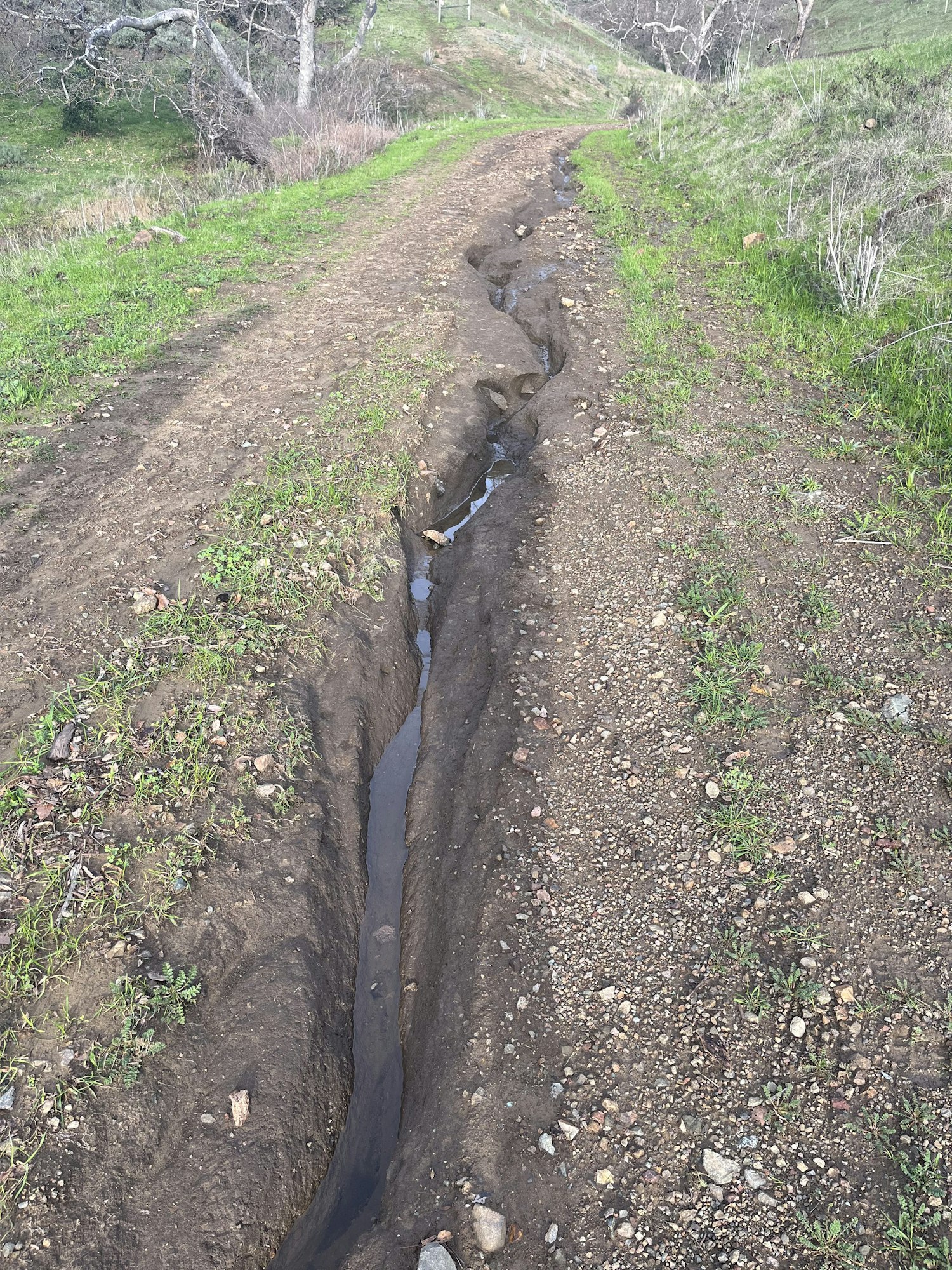
Road systems are among the most significant and controllable sources of sediment delivery to stream channels. An important element of long-term protection of water quality and fish habitat is reducing future impacts from upland erosion and sediment delivery, particularly from roads and road networks.
Sediment delivery from roads has been extensively documented as a major impediment to the health of salmonid habitat, contributing excess fine sediment that fills pools, degrades spawning gravels, and reduces overall stream function. By reducing chronic sediment inputs from managed upland areas, stormproofed road systems help ensure that future storm runoff can naturally transport and redistribute sediment within stream channels, rather than delivering new sediment from roads. This approach supports the long-term biological productivity of the watershed while improving road durability and reducing ongoing maintenance needs.
Stenner Creek and its primary tributary, Brizzolara Creek, have been impacted by excessive fine sediment for decades. Many roads in the watershed were constructed without proper drainage and include undersized culverts, and erosion-prone alignments. During storm events, these roads delivered sediment directly to streams, degrading steelhead spawning and rearing habitat and creating ongoing maintenance and access challenges.


Project Objectives
- Reduce sediment delivery to Stenner Creek and Brizzolara Creek
- Improve and protect steelhead habitat, including spawning gravels and deep pools
- Stormproof ranch roads to improve long-term access and reduce maintenance needs
- Protect water quality while maintaining working lands and recreational access
Implementation
Construction began in summer 2024 and was completed in Fall 2025. All in-channel work was limited to the dry season (July 1 through October 15) to protect water quality and sensitive biological resources.
Implementation activities included:
- Stormproofing approximately 3 miles of ranch roads
- Upgrading 20 stream crossings with structures designed to accommodate high flows and mimic natural hydrology
- Installing road drainage improvements, including rolling dips and reshaped road segments, to disperse runoff into upland areas and reduce concentrated flow
These improvements are estimated to prevent more than 4,000 cubic yards of sediment from entering Stenner Creek over the life of the project.


Project Outcomes
The completed project improves water quality, enhances steelhead spawning and rearing habitat, and provides safer, more resilient road access for ranch operations, students, researchers, and recreational users. By addressing erosion at its source, the project delivers long-term benefits to the Stenner Creek watershed and downstream resources.
Learn More
CSLRCD will be hosting a workshop for landowners and contractors in late spring to early summer 2026 focused on road erosion prevention and stormproofing best management practices. Additional details will be shared as they become available.
In the meantime, landowners and practitioners are encouraged to explore the Handbook for Forest, Ranch and Rural Roads, which provides practical guidance on improving road drainage and reducing erosion on working lands.



Partners: California Polytechnic University San Luis Obispo, Pacific Watershed Associates
Funders: California Department of Conservation, Wildlife Conservation Board
RCD Contact: Hayley Barnes, hbarnes@coastalrcd.org
The work upon which this publication is based was funded in whole or in part through a grant awarded by the California Department of Conservation with funds from the California Drought, Water, Parks, Climate Coastal Protection and Outdoor Access for All Act of 2018