
Carbon Farm Plans

The term “Carbon Farming” may be unfamiliar, but most of the farming practices involved in the process will be recognizable to farmers. In a nutshell, Carbon Farming is the intentional process of bringing the benefits of carbon onto your farm. Most farmers are familiar with the importance of elements such as Nitrogen, Phosphorus, and Potassium, but it is easy to forget that Carbon is the most important and abundant element in the foods, fuels, fibers, and flora (plants) produced on our farms.
Carbon is the means through which the energy from the Sun is captured and stored in usable forms on the farm. Through photosynthesis, plants pull carbon out of the atmosphere and use it to build their plant bodies and store energy, providing us with harvestable crops and forage for livestock. With intentional planning by the farmer, the carbon in the unused portions of the plant can be returned to the soil to provide a host of other benefits. More carbon stored on the farm means more usable energy is stored on the farm, ultimately increasing the health of the whole farm system.
The benefits of Carbon Farming can be placed in two groups: those that directly benefit the farmer (such as lowering costs, increasing yields, improving soil quality, or increasing water holding capacity) and those that indirectly benefit the farmer, the community, and the environment. Throughout the Carbon Farm Planning process, your planner will note what direct and indirect benefits you can expect to reap from the recommended practices.
As a participating organization in CDFA’s Conservation Agriculture Planning Grant Program (CAPGP), the Coastal San Luis Resource Conservation District works directly with farmers and ranchers to develop customized conservation plans, including Carbon Farm Plans. Learn more about this opportunity here.
To learn more about carbon farming and soil health, check out our Soil Health Hub.
CAL POLY RANCHES CARBON FARM PLAN—COMPLETED JANUARY 2020
CSLRCD staff teamed up with an interdisciplinary team of California Polytechnic State University (Cal Poly) staff, faculty and students to develop the Cal Poly Ranches Carbon Farm Plan (CFP). The plan addresses the 4,000 acres of rangeland under Cal Poly’s grazing management. The team compiled baseline data—including soil, ecological sites, climate, topography and hydrology—to understand current conditions on the ranch.
CSLRCD staff and Cal Poly land managers then identified resource concerns and opportunities for carbon sequestration on each ranch, based on current conditions. Examples of identified opportunities include Silvopasture, compost application and riparian restoration.
Once existing conditions on the ranches were assessed, the amount of carbon associated with each practice was estimated by using assumptions built into a tool called the COMET-Planner. It compared the changes in carbon capture and greenhouse gas (GHG) emissions between current and alternative future practices.
The working ranches on Cal Poly’s campus offer an unmatched opportunity to widely demonstrate the benefits of developing a CFP. The nexus between active land management and academia broadens opportunities for outreach and education to current and future land managers.
Read the pdf, “Cal Poly Ranches Carbon Farm Plan 2020.”.pdf
RCD Contact: Hayley Barnes, hbarnes@coastalrcd.org
CITY OF SAN LUIS OBISPO CARBON FARM PLAN

As part of its goal to achieve carbon neutrality by 2035, the City of San Luis Obispo identified carbon sequestration as a key pillar of its Climate Action Plan Update. The City owns and manages extensive open space lands and agricultural reserves, creating opportunities to manage these landscapes in ways that store carbon while delivering ecological and community benefits.
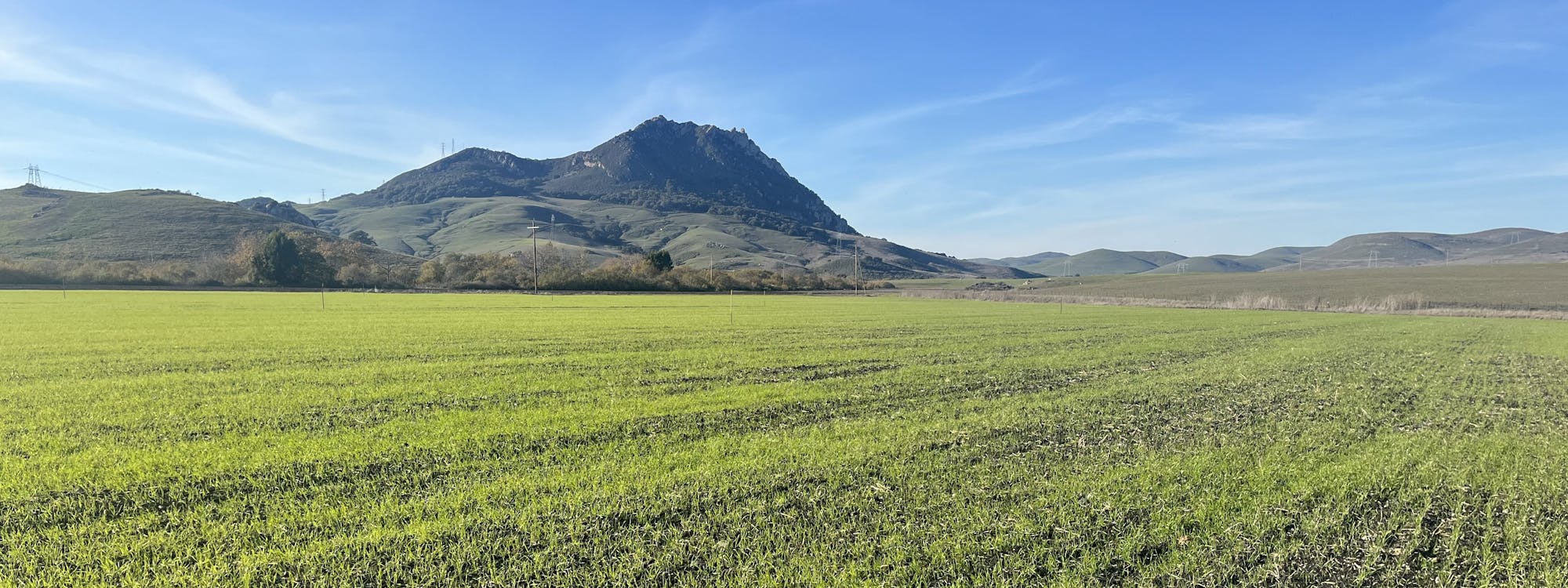
To support these goals, CSLRCD partnered with the City to develop a Carbon Farm Plan and pilot demonstration project for Johnson Ranch Open Space and the Calle Joaquin Agricultural Reserve (City Farm). The CFP identifies management practices that can increase carbon sequestration, improve soil health, enhance water retention, and reduce erosion, while remaining compatible with public access and agricultural use.
Partners: City Farm SLO, NRCS, Cal Poly
Funders: City of San Luis Obispo
RCD Contact: Hayley Barnes, hbarnes@coastalrcd.org